The single biggest fear most clients walk into our studio with about Paint Protection Film is yellowing. Almost everyone has seen a Mustang or 911 from the early 2000s with a clearly yellow front bumper — the bra that lifted, oxidized, and aged badly. So the question is fair: does PPF still yellow in 2026?
The short answer is: premium PPF doesn't, bargain PPF does. The longer answer is what makes the difference, and why every PPF spec sheet talks about a "topcoat" you'll never see.
The chemistry, briefly
PPF is a urethane laminate. Urethane on its own absorbs UV, and over years of strong sun exposure, the polymer chain destabilizes. The visible result is yellowing — a gradual amber tint that becomes obvious against white or silver paint within 3 to 5 years.
Premium films like XPEL Ultimate Plus, 3M Pro Series, and SunTek Ultra solve this with a clear topcoat layer applied during manufacturing. That topcoat does two jobs: it self-heals minor scratches under heat, and it absorbs UV before it reaches the urethane underneath.
The topcoat is the entire reason XPEL warranties Ultimate Plus against yellowing for 10 years. It's also the reason a "PPF" sold on Amazon for $200 a roll yellows in 18 months under Florida sun.
What yellowing looks like, and when
You won't see yellow on day one. You typically won't see it at year three. The transition is gradual and most noticeable on:
- White paint (yellow-on-white reads like a stain)
- Silver and light grey paint
- Edges where film meets clean clear coat
- Hood leading edges (most direct sun exposure)
If a vehicle parks under a tropical sun for hours daily, bargain film can yellow before its second summer.
Choosing the right film for Miami
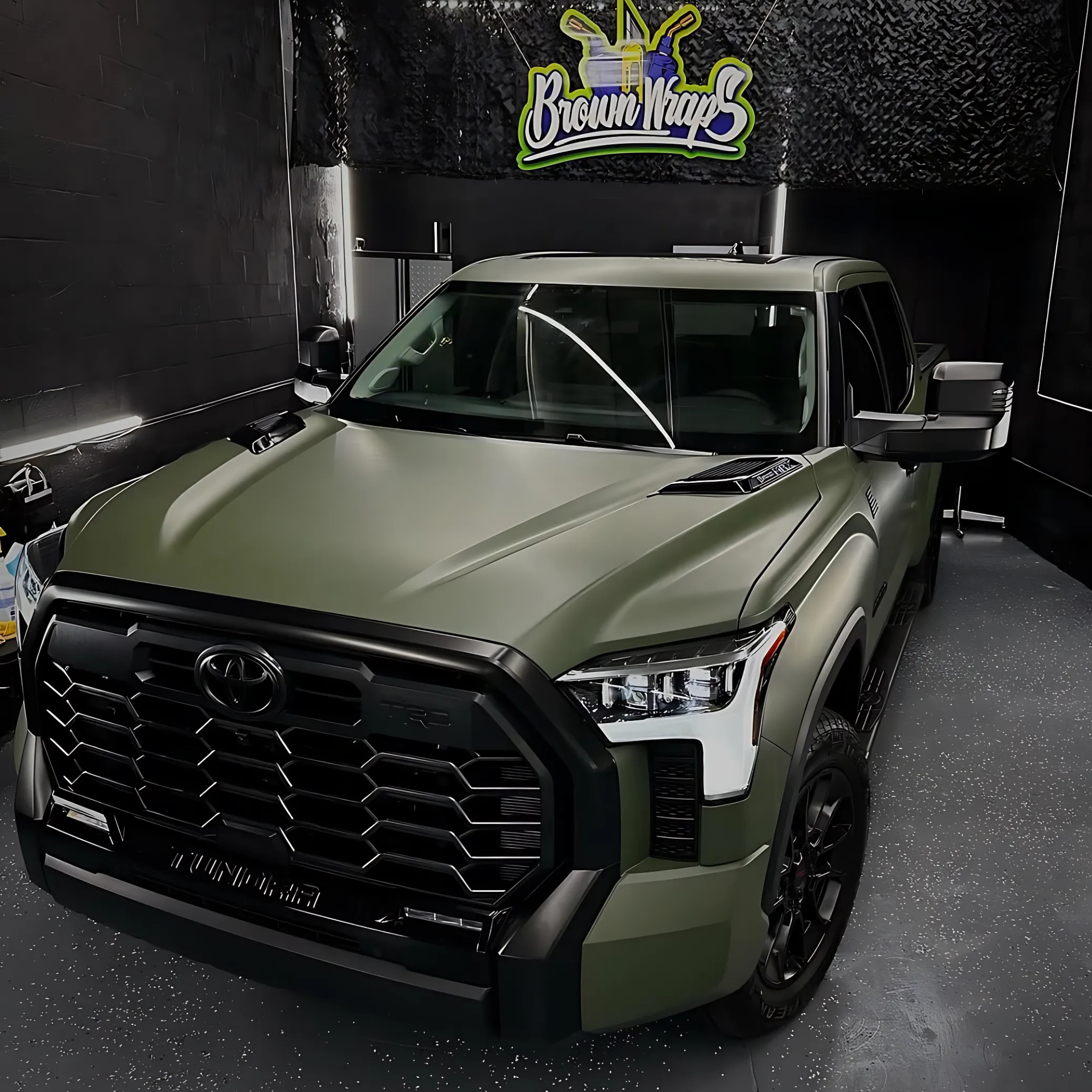
The films we install at Brown Wraps and stand behind for our climate:
- XPEL Ultimate Plus — 8 mil, self-healing, 10-year warranty against yellowing and peeling. Our most-installed.
- XPEL Stealth — same chemistry but matte finish. Beautiful on satin paint or as a complete identity change.
- 3M Pro Series Scotchgard — 7-year warranty, similar self-healing, slightly different application feel.
- SunTek Ultra — 10-year warranty, excellent stretch around complex curves.
What we will not install: any unbranded urethane, any film without a documented warranty, any film cheaper than around $400 wholesale per a vehicle's full-front coverage. The math doesn't work — the manufacturer cannot afford a UV-stable topcoat at that price.
What you can do
Whatever PPF you have, two habits stretch its warrantied life:
- Garage parking when possible. UV degradation is dose-dependent.
- Routine washing with pH-neutral soap. Acid rain and salt residue accelerate topcoat wear.
- Avoid pressure-wash on edges — it's the single most common cause of premature lifting.
- Skip the brush carwash. They scratch the topcoat and reduce self-healing performance.
If your existing PPF is already yellow
Yellowing is irreversible — it's chemical degradation, not surface contamination. The fix is removal and replacement. We can pull old film cleanly within or just past its warranty window, decontaminate the original paint, and install fresh premium PPF. Most clients leave with an under-warranty install that visually resets the car to factory.
If you're considering PPF for the first time and you're concerned about yellowing — that's the right question to ask. Ask any installer for the manufacturer warranty card and the spec sheet for the specific film they intend to install. If they don't have one, that's your answer.